Industrial Heating Roller
Industrial heating rollers transfer heat to a moving web or other material. Define the process duty and confirm the heating arrangement before selecting a roll.
Start a conversation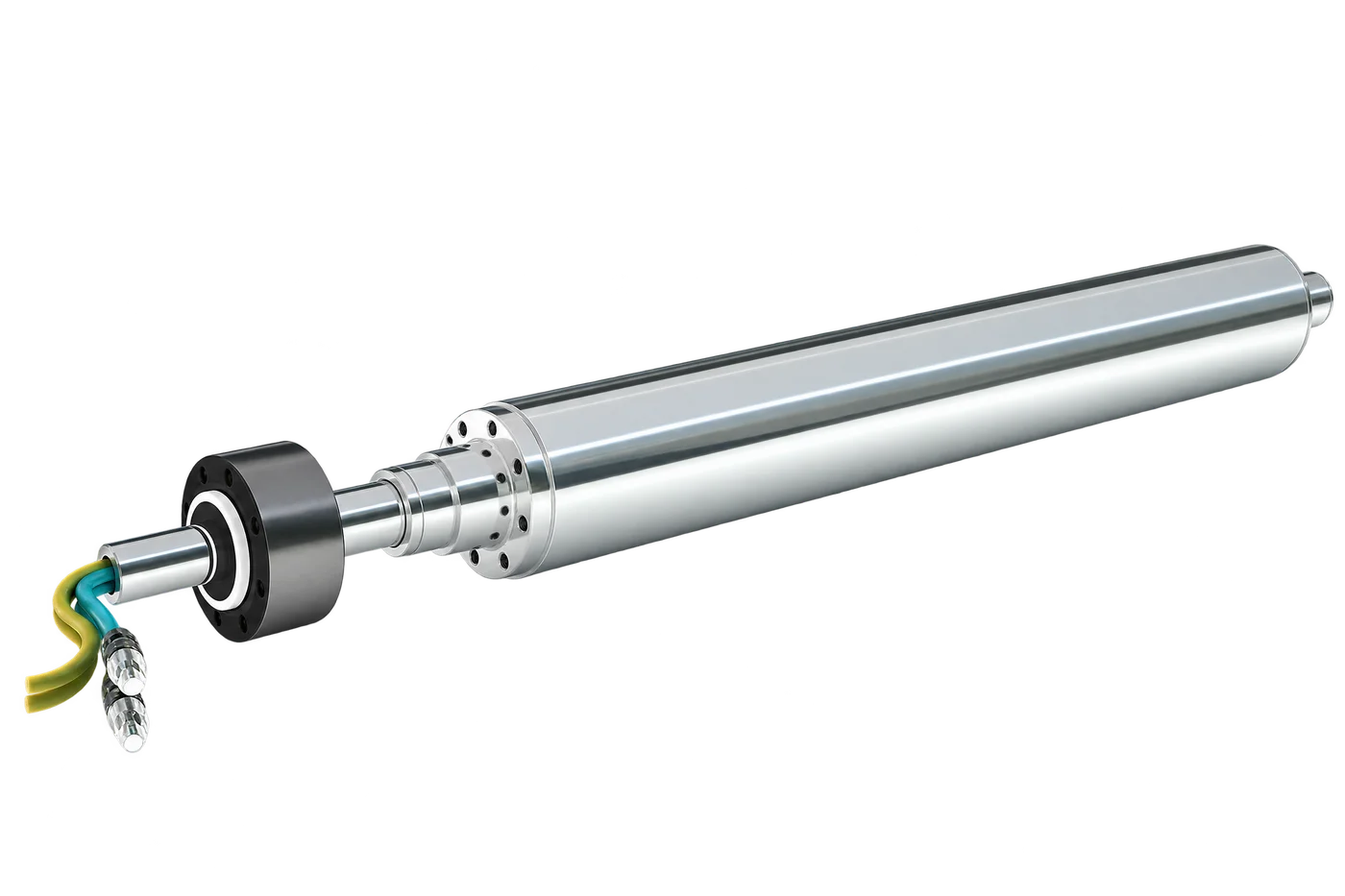 Illustrative imagery
Overview
An industrial heating roller transfers heat through its surface to material in contact with it. Depending on the line, heating can support operations such as laminating, calendering or conditioning film and paper. The required surface temperature is only one part of the design: the material, contact time and production load also affect how much heat the process needs.
Define the heating arrangement
Industry options include circulating thermal fluid, internal electric resistance heaters and induction heating. These are different system architectures, not interchangeable features of every roll. An electrically powered external thermal-fluid heater is still a fluid-circulation system. The appropriate arrangement depends on available utilities, control requirements and machine integration; confirm the options available for the specific project with Wenzhou Qichao Roller Co., Ltd.
Describe the temperature range, line speed, heated width, incoming material and expected duty cycle. Also identify the available supply and installation interfaces. Ask how the surface temperature will be measured under production load, rather than relying only on the controller setpoint.
Plan for operation and maintenance
Consider guarding, thermal expansion, access for service and the condition of any existing heater or fluid circuit. The roll, controls, connections and protective devices should be assessed as a system. Final construction, compatible processes and any performance targets require technical confirmation; do not assume a particular heating method or surface treatment is available.
Applications
- Heating film or paper webs, subject to process compatibility
- Laminating lines requiring controlled roll contact heat
- Calendering or material conditioning where a heated roll is specified
What to consider
- Heating method: evaluate thermal fluid, electric resistance or induction as project-specific industry options
- Process control: agree on surface-temperature measurement and acceptable variation under load
- Machine integration: confirm the supply, interfaces, safeguarding and maintenance access
- Construction and surface: establish requirements and confirm available solutions before ordering
Every line is different.
Dimensions, material, finish and operating requirements are confirmed for each project. Please share your drawing or operating conditions when requesting a quote.
Start a conversation