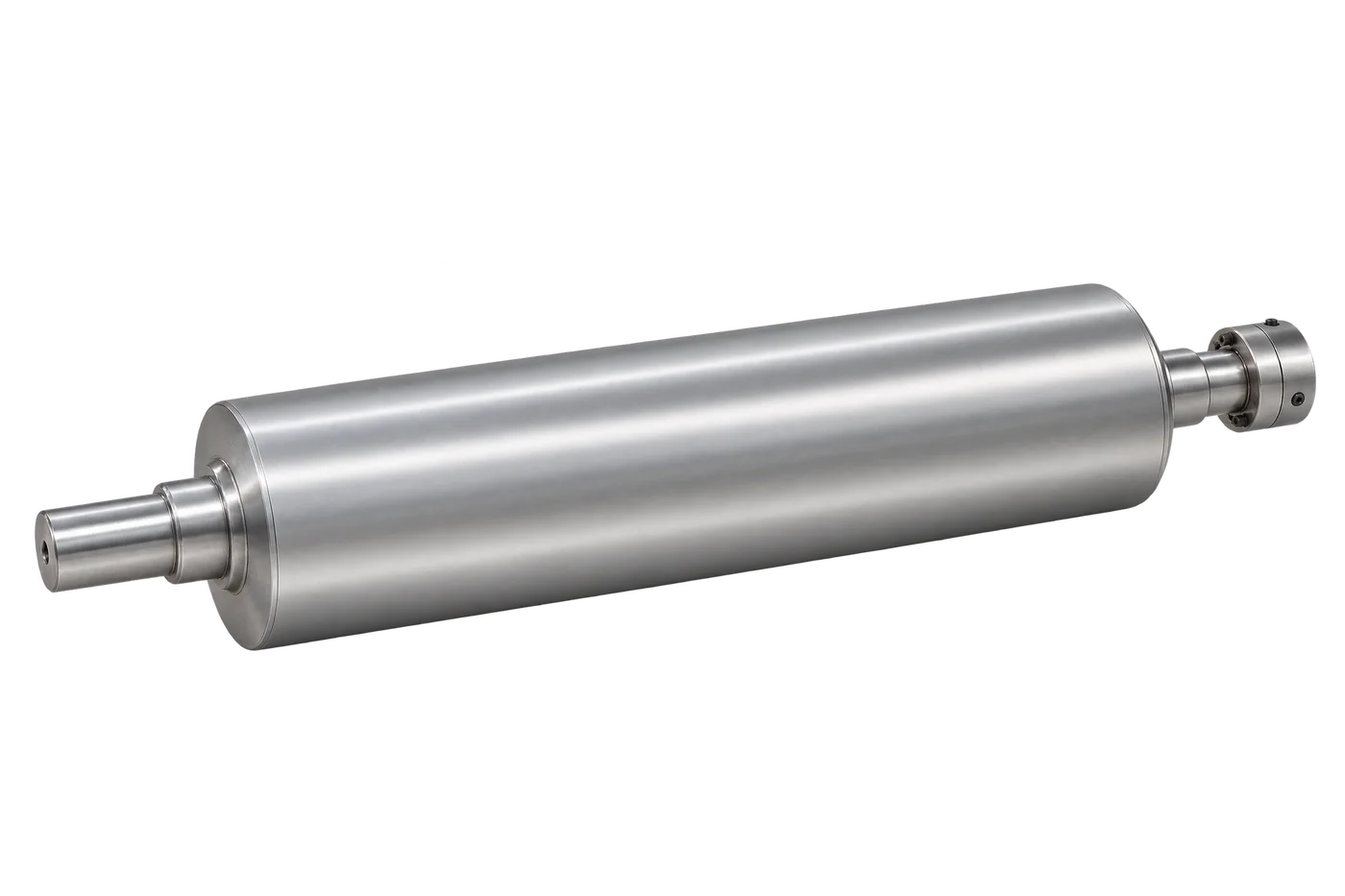
A cold roll can look dry at startup and develop moisture later when the surrounding air changes. In cast film and other web processes, water at the contact interface may mark the product or interfere with consistent contact. Similar symptoms can have other causes, so treat condensation as a hypothesis to check, not an automatic diagnosis.
Compare the surface with the local dew point
Dew point is the temperature at which air becomes saturated as it cools. When a roll surface is at or below the dew point of the air next to it, water can condense; a small difference also leaves little room for measurement error or changing conditions. Room relative humidity alone is not enough to assess the risk. Air temperature and humidity can vary near doors, ventilation outlets and the process itself.
Use a suitable humidity and temperature instrument to determine dew point near the exposed roll, without placing personnel or equipment in a hazardous position. Compare it with a reliable measurement of the actual surface, not just the coolant supply or controller setpoint. Use installed instrumentation or an approved non-contact method where safe. Reflective surfaces can make infrared readings unreliable; follow the instrument and equipment makers' measurement guidance. Measurements taken at rest may not represent running conditions.
As an illustration, a surface at 15 °C exposed to air with a 17 °C dew point is at risk of condensation. If the local dew point falls or the surface warms, the risk can decrease. Allow a margin above the measured dew point that accounts for instrument uncertainty and operating variation; agree the margin with the process and controls suppliers rather than using a universal number.
Separate moisture from poor film contact
For cast film, trapped air can also prevent close film-to-roll contact and affect heat transfer or appearance. Moisture and air entrainment can coexist, but they are not the same fault. Record where and when the symptom starts: at an exposed roll edge, at initial film contact, after a humidity change, or after a process adjustment. Check the observations against local dew point and available surface-temperature data.
Pinning arrangements differ by machine. A nip roller, air knife, electrostatic pinning or vacuum assistance may be used on some lines, but each requires equipment-specific assessment. An air knife is a film-pinning device, not a doctor blade or comma bar. Do not increase force, air pressure or vacuum without the line maker's approved limits; improper changes can damage the film or create hazards.
Practical prevention and a safe check
- Trend local dew point and available surface temperature through startup, production and shutdown. Note weather, ventilation changes and the location of any visible moisture.
- If the process permits, review whether the surface can run warmer while maintaining product quality. Alternatively, assess dehumidification or a properly designed dry-air enclosure with the relevant equipment suppliers. Confirm airflow, air quality and guarding before changes.
- Before close inspection, cleaning or adjustment inside guarded areas, stop the equipment and follow the site's applicable lockout/tagout procedure. Isolate and verify relevant energy sources, including stored mechanical, electrical, pneumatic, hydraulic, thermal and coolant pressure hazards as applicable. Never reach into a moving nip. See OSHA's hazardous-energy guidance; local rules also apply.
- After an approved change, compare defect position and product quality with the same operating conditions. If marks persist, investigate other causes rather than repeatedly lowering the roll temperature.
For a new or replacement industrial cooling roller, share the material, contact arrangement, cooling system and expected operating environment with Qichao; suitability and available options must be confirmed for the project.
Sources
- Vaisala: Dew point temperature — dew point and condensation fundamentals.
- Parkinson Technologies: Casting configurations in film and sheet applications — contact, entrained air and examples of pinning arrangements.